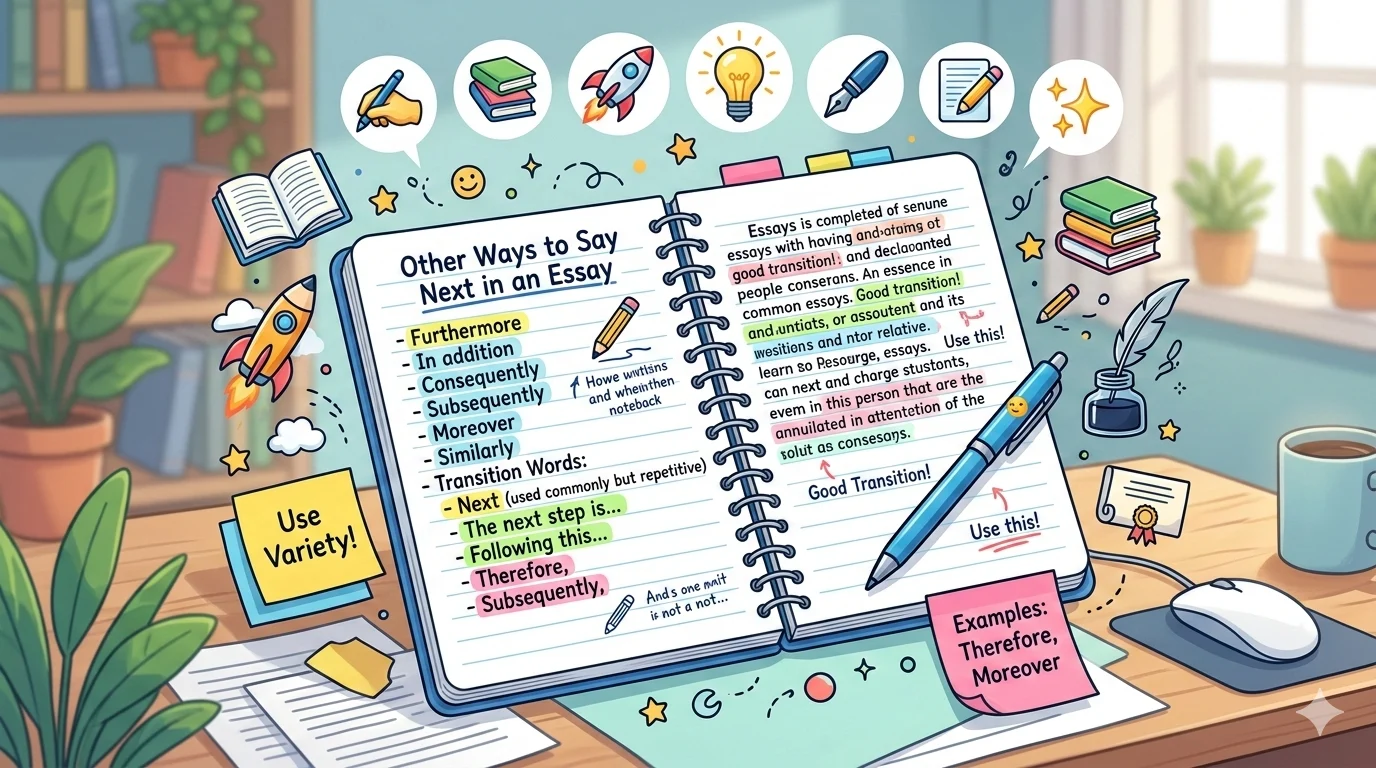
Do you keep using next again and again in your essay? Be honest 😊 It feels easy. It feels safe. But repeating the same word makes your writing sound basic, your ideas lose impact, and your reader gets bored. Strong writing isn’t about big words—it’s about smooth connections. The right transition words guide your reader, build rhythm, and make your essay clear, smart, and persuasive.
If you want better flow and higher grades, here’s your solution: alternatives like subsequently, afterward, then, following this, moving forward, and thereafter instantly upgrade your sentences. In this guide, you’ll learn practical alternatives that work in essays, exams, blogs, and assignments. Let’s elevate your writing today 🚀
Simple Words to Show Order 📝
- Then
- After that
- Following that
- Later
- Soon after
- Right after
- Straight after
- Immediately after
- In order
- In sequence
- At this stage
- At that point
- In the next step
- As it continues
- Step by step
- Moving ahead
- Going forward
- From here
- Afterward
- Before long
👉 Example: First we explained the problem. Then we discussed the solution.
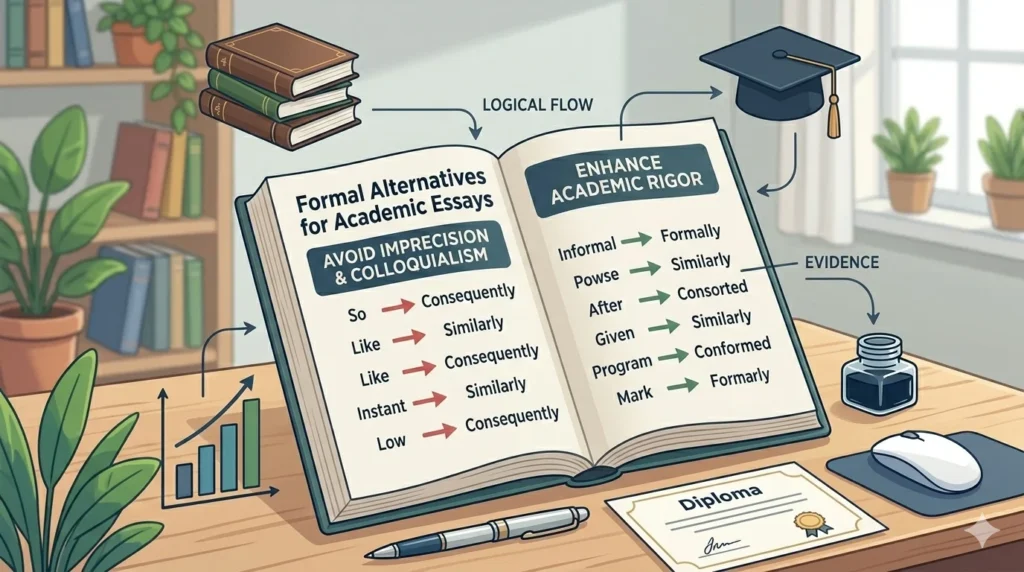
Formal Alternatives for Academic Essays 🎓
- Subsequently
- Thereafter
- Consequently
- Accordingly
- In the following section
- In the next phase
- As the discussion continues
- In the succeeding paragraph
- In continuation
- In progression
- In due course
- At this juncture
- In the subsequent stage
- In advancing the argument
- As the paper unfolds
- In the latter part
- In the next segment
- As outlined next
- In further discussion
- In the upcoming analysis
👉 Example: The theory is introduced. Subsequently, its effects are analyzed.
Friendly and Natural Transitions 😊
- Now
- Let us move on
- Let us look at
- Next up
- On we go
- Here is what comes next
- Let us explore
- Moving along
- Shifting gears
- Let us dive in
- Time to talk about
- Up next
- From here on
- Let us continue
- On to the next point
- Let us check out
- Let us break down
- What comes next is
- Let us turn to
- Let us begin
👉 Example: Now let us explore the second reason.
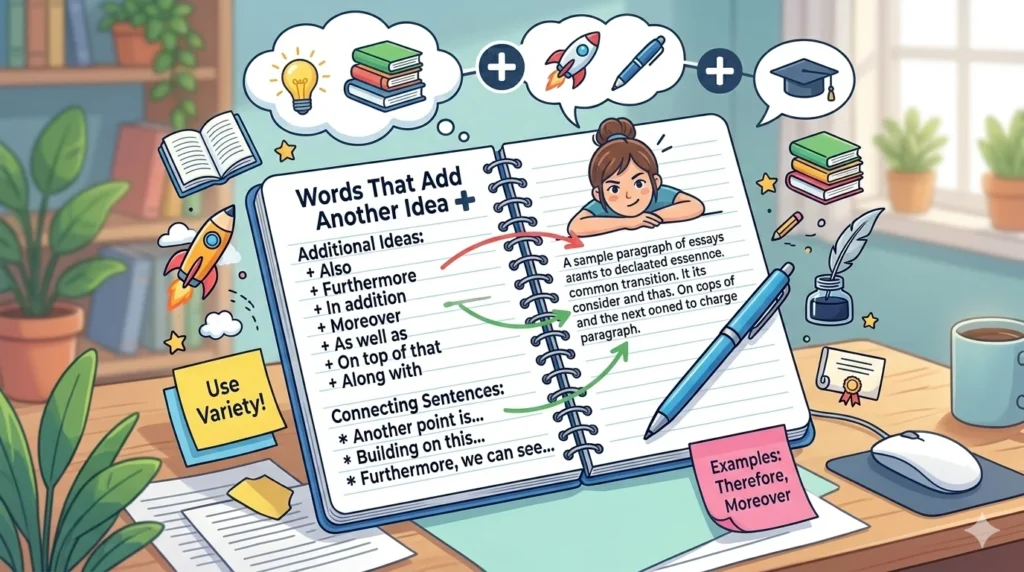
Words That Add Another Idea ➕
- Also
- In addition
- Furthermore
- Moreover
- Besides
- Too
- As well
- Not only that
- What is more
- Along with this
- Another point is
- Equally important
- On top of that
- Likewise
- Similarly
- Plus
- Adding to this
- To add more
- Continuing further
- Again
👉 Example: The policy saves money. In addition, it improves safety.
Time Based Transitions ⏳
- Afterwards
- Later on
- Eventually
- At first
- At last
- Meanwhile
- At the same time
- Earlier
- Recently
- Currently
- At present
- At that moment
- From then on
- Over time
- In the meantime
- Soon
- In time
- After a while
- At the beginning
- In the end
👉 Example: At first the plan seemed risky. Later on it worked well.
Cause and Effect Transitions 🔗
- Therefore
- Thus
- Hence
- As a result
- Because of this
- For this reason
- So
- That is why
- Consequently
- Due to this
- In response
- Under these conditions
- On that basis
- Given this
- Following this
- With this in mind
- This led to
- This caused
- In consequence
- Accordingly
👉 Example: The results were clear. Therefore, we changed the strategy.
Continue an Argument Smoothly 🗣️
- Building on this
- Expanding on this
- Taking this further
- Adding to the argument
- Continuing this idea
- In the same way
- Along these lines
- Supporting this
- To support this
- As mentioned earlier
- As noted before
- In agreement
- Backing this up
- In a similar manner
- Let us go further
- Moving deeper
- To continue
- Following this logic
- Based on this
- From this view
👉 Example: Building on this, we can see a strong pattern.
Show Contrast Clearly ⚖️
- However
- On the other hand
- In contrast
- Yet
- Still
- But
- Even so
- Although
- Though
- Instead
- Alternatively
- By comparison
- At the same time
- Despite this
- Rather
- While
- Whereas
- Unlike this
- Conversely
- In opposition
👉 Example: The idea sounds simple. However, it needs effort.
Give Clear Examples 📌
- For example
- For instance
- To illustrate
- Such as
- In particular
- Specifically
- Namely
- Including
- One example is
- A case in point
- To show this
- As proof
- In other words
- In fact
- Consider this
- Take this case
- To explain
- In simple terms
- As evidence
- For clarity
👉 Example: Many foods improve health. For example, vegetables boost immunity.
Ending and Wrapping Up Strongly 🏁
- Lastly
- Finally
- In conclusion
- To sum up
- In summary
- In short
- Overall
- All in all
- To conclude
- In closing

- To wrap up
- In essence
- In a nutshell
- Ultimately
- On the whole
- As a final point
- In the final analysis
- To end
- At last
- As we finish
👉 Example: In conclusion, better transitions improve essay quality
Powerful Conclusion 🌟
Strong essays are built on strong connections. When you stop repeating next and start using better transition words, your writing changes instantly. It becomes smoother. It becomes clearer. It becomes more engaging. Every transition works like a bridge between ideas. It keeps your reader moving forward without confusion.
Small improvements create big results. Better flow leads to better understanding. Better understanding leads to better grades. Whether you are writing for school, exams, or online content, using a variety of transitions will set you apart. Keep this guide saved. Practice these phrases daily. The more you use them, the more natural they will feel. Great writing starts with simple, smart choices 💪

Ocean Vuong is a Vietnamese-American poet and novelist, best known for On Earth We’re Briefly Gorgeous, blending memory, identity, and language.