
Do you feel like time management is a boring old phrase? You are right. It sounds like homework. But getting things done does not have to feel hard. You just need better words. Words that feel light, smart, and human.
In this guide, I will show you eight fresh ways to talk about your day. Each way comes with a simple meaning, a real tip, how to use it, and a daily example. I have also added resume keywords, common questions, and a quick fix for procrastination.
Whether you are a student, a parent, a boss, or a freelancer, these phrases will help you work smarter. No more chasing the clock. No more stress. Let us rebuild how you spend your 24 hours. Start with number one. It is my favorite.
Energy Flow
Meanings
Energy flow means doing hard tasks when you feel most awake. It is not about hours. It is about your body’s natural rhythm. You stop fighting yourself.
Tip
Track your energy for three days. Write down when you feel sharp and when you feel slow. Then plan your day around your peak hours.
Usage
Tell your team: I use energy flow. My best work happens before lunch. Can we move meetings to the afternoon?
Example
Meet Riya. She is a content writer. She writes new articles at 7 AM. By 10 AM, she is done with deep work. Then she answers emails at 2 PM when she is low on energy. Her boss loves her speed.
👉 Resume keyword: Mastered energy flow to increase daily output by 30%
Priority Mapping
Meanings
You draw a simple map of what must come first. You separate urgent tasks from nice to do tasks. No more guessing.
Tip
Every morning, pick only three must do tasks. Write them on a sticky note. Finish these before you check your phone.

Usage
Say this to a coworker: Let me finish my priority mapping first. I will get back to you in one hour.
Example
Aman is a project manager. He has ten things on his list. He picks three: client report, team feedback, budget check. He does these by 11 AM. The other seven can wait. He feels calm, not rushed.
👉 Resume keyword: Skilled in priority mapping under tight deadlines
Task Chunking
Meanings
You group small similar tasks together. You do them in one short block. Your brain loves this because you stop jumping between different work types.
Tip
Set a timer for 25 minutes. Do only one type of task. Then rest for 5 minutes. Repeat four times.
Usage
Tell a friend: I am doing task chunking for my emails. Call me after 30 minutes.
Example
Neha is a teacher. She has 40 quizzes to grade. She does not spread them through the day. She sits down at 3 PM. She grades for 50 minutes straight. Done. Then she plans tomorrow’s lesson in the next chunk.
👉 Resume keyword: Improved efficiency using task chunking by 40%
Focus Blocking
Meanings
You block a chunk of time for one task only. No phone. No chat. No interruptions. You give the task your full love.
Tip
Tell people you are in a focus block. Close your door or wear headphones. Turn off all notifications. Start with just 30 minutes.
Usage
Say this to your boss: I need a 90 minute focus block for this report. I will be back online after that.
Example
Raj is a coder. He has a bug to fix. He closes Slack. He puts his phone on silent. He writes code from 10 AM to 11:30 AM. He fixes the bug. Then he takes a walk. His team calls him smart.
👉 Resume keyword: Used focus blocking to deliver projects two days early
Rhythm Setting
Meanings
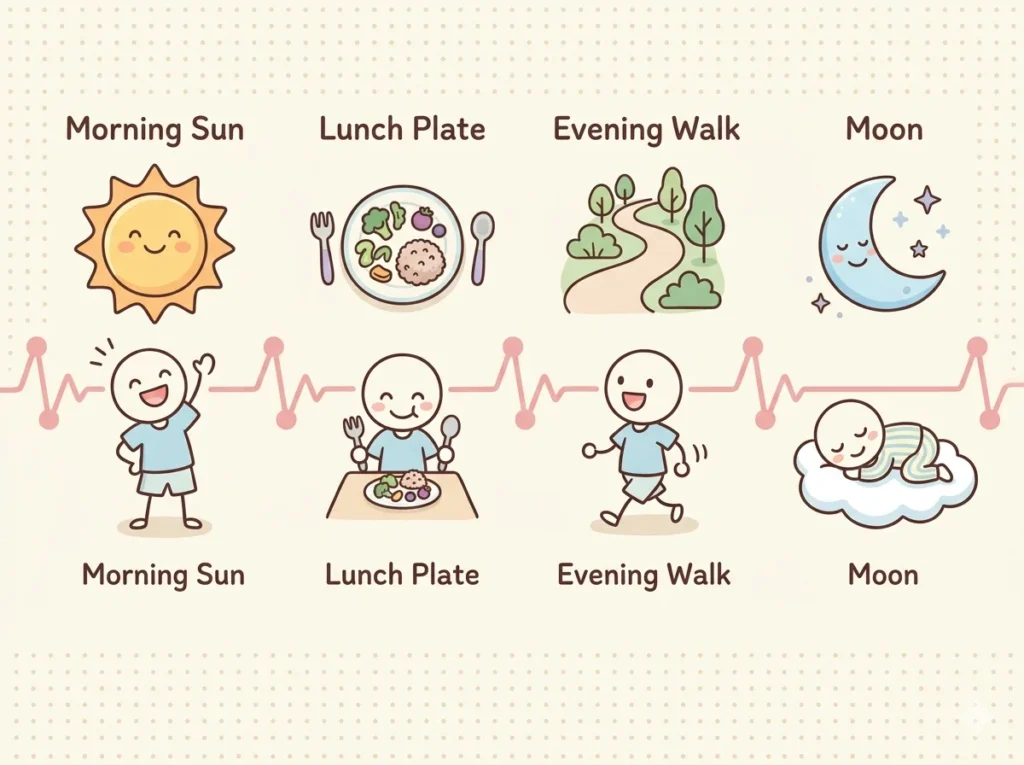
You create a gentle daily beat. You do the same small things at the same time each day. Your brain learns the rhythm and stops fighting you.
Tip
Start your day the same way. End your day the same way. Example: tea, then planning, then work. At night: review, then walk, then sleep.
Usage
Tell a colleague: I am building my rhythm setting. Mornings are for deep work. Afternoons are for calls.
Example
Simran is a small business owner. Every day at 9 AM she checks orders. At 10 AM she calls suppliers. At 12 PM she takes lunch. At 4 PM she cleans the shop. Her staff knows the beat. No confusion.
👉 Resume keyword: Established rhythm setting that reduced team confusion by 50%
Attention Budgeting
Meanings
Your attention is like money. You have only 100 coins each day. Spend them on what matters. Do not waste coins on distractions.
Tip
Write down what steals your focus. Social media? News? Group chats? Give them only 10 coins (10% of your day).
Usage
Say this to yourself: I am using attention budgeting today. My main project gets 60 coins. Everything else gets 40.
Example
Karan is a graphic designer. He gives 60% attention to a client logo. He gives 20% to team messages. He gives 10% to email. He saves 10% for breaks. He finishes the logo in 4 hours instead of 6.
👉 Resume keyword: Applied attention budgeting to cut project time by 25%
Outcome Focusing
Meanings
You stop counting hours. You start counting what you finish. Results matter more than how long you sit at a desk.
Tip
Each night ask: What did I finish today? Not: How many hours did I work? Then celebrate small wins.
Usage
Tell your boss in a meeting: I prefer outcome focusing. Let me show you what I completed this week, not how long I sat.
Example
Priya is a salesperson. She finishes her pitch deck in 3 hours. She leaves early. Her coworker sits for 8 hours but finishes nothing. Who worked better? Priya. Her boss agrees.
👉 Resume keyword: Promoted outcome focusing culture and increased team output by 35%
Time Investment
Meanings
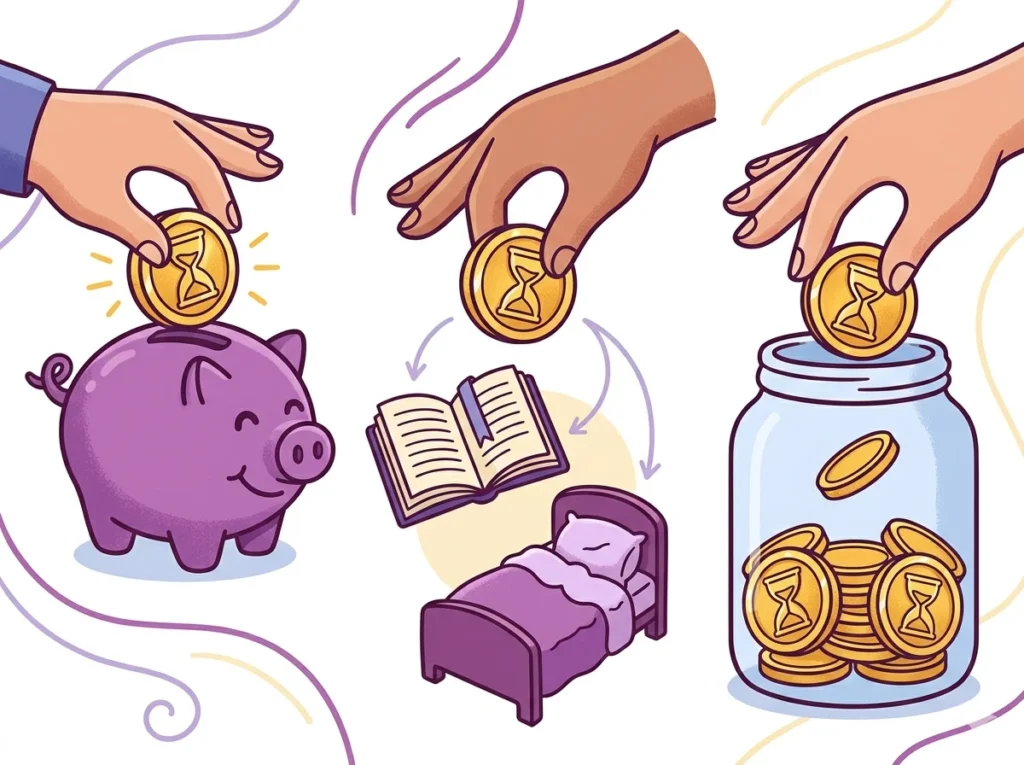
Every hour is a coin. Spend it on things that give you back value. Rest is an investment. Learning is an investment. Saying no to bad meetings is an investment.
Tip
Before any task, ask: Is this a good investment of my time? If no, stop or say no politely.
Usage
Tell a friend: I am thinking about my time investment. That two hour meeting does not feel like a good investment. I will skip it.
Example
Anjali is a team lead. She gets invited to a long status meeting. She asks: What will I get back from this? Nothing new. She says no. She invests that two hours into training her junior. That training pays off for months.
👉 Resume keyword: Expert in time investment decisions that saved 200+ team hours per year
📌 Bonus: Resume Keywords + Common Questions (Fast Lookup)
Another word for time management on resume
- Prioritization · Task coordination · Workflow optimization · Deadline driven · Energy flow
Phrase for time management
- Balancing competing demands · Structuring my workday · Outcome focusing
Time management antonym
- Procrastination · Chaotic work habits · Time wasting · Distraction flooding
Time management skills
- Scheduling · Goal setting · Delegation · Attention budgeting · Rhythm setting
How to say good time management on resume
- Consistently met tight deadlines · Organized daily workflows with ease · Used focus blocking
Efficient time management
- Lean scheduling · High output in fewer hours · Task chunking
Time allocation
- Resource distribution · Hour planning · Priority mapping
Adjective for time management
- Structured · Disciplined · Streamlined · Rhythmic · Invested
What is another way to say time management?
Energy flow or priority mapping.
How do you professionally say time management?
Attention budgeting or outcome focusing.
What can I say instead of management?
Coordination or rhythm setting.
What do you call time management?
Time investment or task chunking.
Conclusion
You now have eight powerful and kind ways to talk about your day. No more boring time management. No more stress. Start with just one phrase. Try energy flow tomorrow morning. Or use priority mapping when you feel lost. Each small change will make you feel lighter and more in control. Remember, the goal is not to fill every minute. The goal is to spend your minutes on what brings you joy, results, and rest. Some days will still feel messy. That is okay. Be gentle with yourself. Pick one new habit. Try it for one week. Then add another. You have the power to reshape your 24 hours. Not with strict schedules, but with smart, human words. Now go and invest your time well. And before you leave, answer this in your mind: Which of these 8 will you try tomorrow? Save this article. Share it with a friend who feels busy but not productive.

Thomas Hardy (1840–1928) was an English novelist and poet, famous for realistic rural stories, tragic themes, and novels like Tess of the d’Urbervilles.