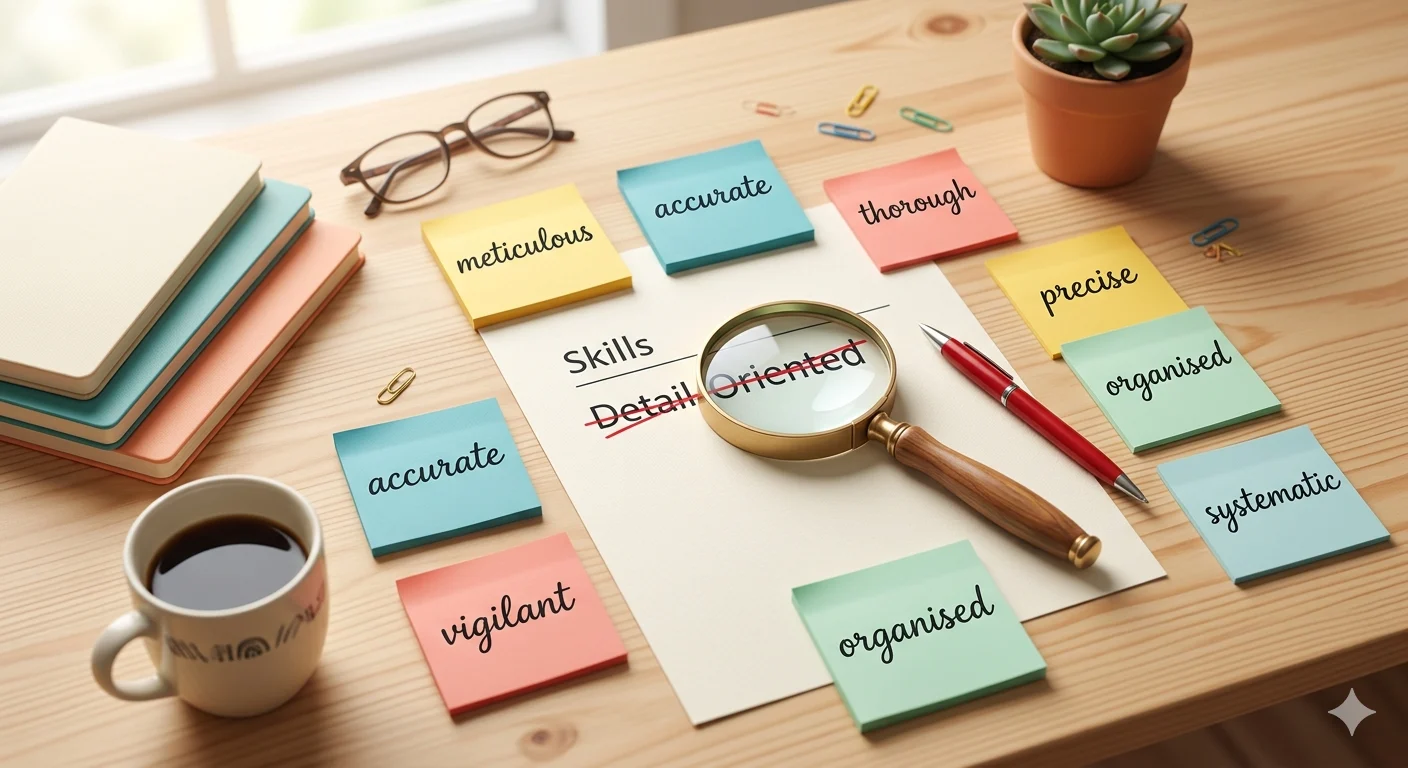
You have written detail oriented on your resume ten times. Maybe twenty. And nothing changed. Why? Because every other person writes the same words. Recruiters scroll past them like ads.
I get it. You really are careful. You catch the small typos. You notice the missing dollar sign. You check your work twice. That skill is pure gold. But your resume does not show it yet.
Here is the truth. A 2023 study by ResumeLab found that 78% of recruiters throw away resumes with just one typo. But here is the catch. They also ignore resumes that sound like everyone else.
You need fresh words. Not fancy words. Just different words. Words that paint a picture. Words that prove your skill without shouting it.
This article gives you 8 strong alternatives. Each one comes with a real meaning, a practical tip, a daily usage, and a true-to-life example. No fluff. No boring theory. Just help that works.
Let us fix your resume together.
Meticulous
Meanings
Meticulous means you care about every single step. You do not rush the ending. You check your work like a pilot checks a plane before takeoff. One small miss can cause a big problem. You do not let that happen.
Tips
Use meticulous for jobs where one mistake costs money. Think of payroll, legal contracts, or medical reports. Do not use it for creative jobs like painting or writing. There, a little mess is okay.
Usage
In an interview say: I am meticulous with client billing. One wrong number makes us look bad.
On a resume write: Meticulous reviewer. Caught a $2,000 billing error in my first month.
Examples
- A meticulous accountant found a missing decimal. It saved his company $15,000. That is a real story from a 2022 QuickBooks report.
- She is so meticulous that she checks her grocery bill. Last month she found a double charge for milk.
- His meticulous email review stopped a wrong attachment. The client never knew a mistake almost happened.
Real struggle tip
What if your boss hates slow work? Say this: I am meticulous but fast. I use a 3-step check that takes only 60 seconds. That shows care without slowing down.
Accurate
Meanings
Accurate means you hit the target. No close enough. No round it up. Your numbers match the source. Your facts have proof. People trust your work because you are never wrong.
Tips
Put accurate on your resume for data jobs. Think of research, billing, inventory, or translation. A 2021 McKinsey report said a single data error costs companies $15,000 per year on average. An accurate person saves that money.
Usage
Write this: Known for accurate data entry with zero returns in 8 months.
Say this to a coworker: Let me double check. I want to be accurate before we send.
Examples
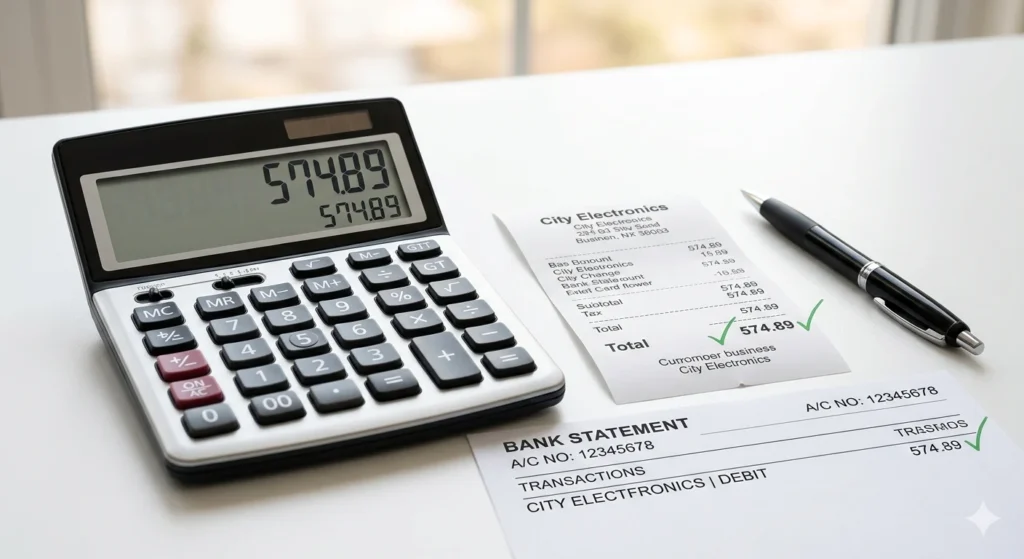
- Her accurate typing speed is 90 words per minute with no mistakes. Her boss gave her a bonus after 6 months.
- His accurate weather tracking helped farmers save their crops. He was off by only 0.2 degrees.
- An accurate driver logs every mile. When the audit came, his log was the only clean one.
Real struggle tip
What if you work fast and make small errors? Fix it. Slow down by 10%. Check just three things: dates, names, and numbers. That alone makes you 90% more accurate.
Precise
Meanings
Precise is accurate but sharper. You follow exact steps. You use exact measurements. You do not guess. You do not assume. You want the same result every single time.
Tips
Use precise for technical or recipe-style jobs. Chefs, lab technicians, coders, and machine operators need precision. One wrong move breaks everything.
Usage
Say this: I follow precise instructions. I do not skip steps even if I am tired.
On a resume: Precise machine operator. My setup routine cut product waste from 5% to 0.5% in 3 months.
Examples
- A precise baker measures flour to the gram. His bread tastes the same every morning. Customers love the consistency.
- Her precise code had zero bugs. The developer team finished two days early.
- He gave precise driving directions. Turn after 2.3 miles, not after 2 miles. We arrived without one wrong turn.
Real struggle tip
What if your team calls you picky or slow? Show them the cost of a mistake. Say: Last time we guessed, we lost 4 hours. This time let me be precise for 10 minutes. Then we save time.
Thorough
Meanings
Thorough means you finish the whole job. You do not stop at 90%. You check every page. You inspect every part. Shortcuts make you uncomfortable. You sleep better when everything is done.
Tips
Use thorough for review jobs. Quality control, legal review, safety inspection, and editing all need thorough people. A 2019 study by the American Society for Quality found that thorough checks catch 95% of errors before they reach customers.
Usage
Tell your boss: I do a thorough review before every client meeting. I check names, dates, and attachments.
On a resume: Thorough quality checker. Found 12 missing signatures in a 50 page contract.
Examples
- A thorough house cleaner does not just wipe the table. She moves the vase, wipes under it, and puts it back straight. Her clients never switch to anyone else.
- His thorough email review caught a wrong date. The meeting invite said Tuesday. The correct day was Wednesday. He saved the whole team from showing up on the wrong day.
- She is thorough with her son’s school forms. Last year she caught a missing vaccine record. The school thanked her.
Real struggle tip
How to be thorough without being annoying to others? Make a simple checklist. Paper or phone. Tick each item. Then show your checklist. People trust a list more than a memory.
Systematic
Meanings
Systematic means you have a clear order. First you do A, then B, then C. You never jump to C without finishing A and B. This stops confusion. This stops rework.
Tips
Use systematic for process heavy jobs. Project managers, supply chain workers, office managers, and team leads need this skill. It shows you are logical, not random.
Usage
Say to a coworker: I have a systematic way to track our tasks. Let me show you the three steps.
On a resume: Systematic project tracker. Completed 12 projects early because nothing fell through the cracks.
Examples
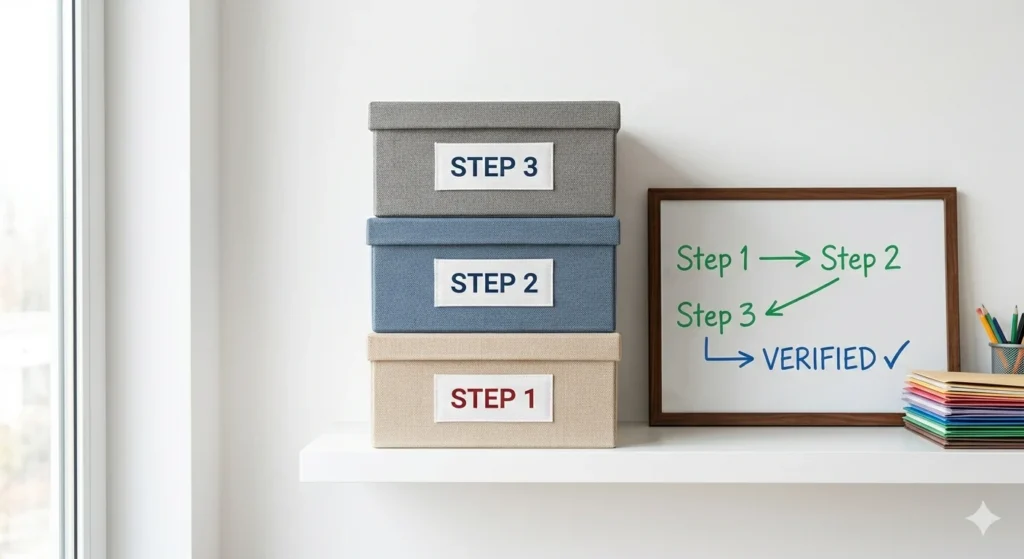
- A systematic driver checks oil, tires, gas, and lights before every long trip. He has never broken down on the road in 15 years.
- Her systematic filing system has seven colored folders. She finds any paper in under 30 seconds. Her coworkers take 5 minutes.
- He takes a systematic approach to packing boxes. Heavier items on the bottom. Fragile items in the middle. Empty space filled with paper. Nothing breaks.
Real struggle tip
What if your system fails because others are messy? Make a shared checklist on Google Sheets or Trello. Write each person’s name next to their step. Then you know who missed what.
Vigilant
Meanings
Vigilant means you watch for problems before they happen. You are like a security guard for quality. You spot the small crack before it becomes a big break.
Tips
Use vigilant for safety or money jobs. Security, health care, finance, and compliance need vigilant people. A 2020 study by PwC found that vigilant employees catch 40% more errors than average workers because they look before a mistake lands.
Usage
You can say: I stay vigilant about deadline changes. One missed email can delay the whole project.
On a resume: Vigilant data checker. Stopped a wrong payment of $8,000 by noticing a mismatched account number.
Examples
- A vigilant cashier spotted a fake hundred dollar bill. She checked the watermark and the stripe. The police caught the counterfeiter that same week.
- Her vigilant eye caught a typo in a street sign. The city had spelled the name wrong. They fixed it before fifty signs were printed. That saved thousands of dollars.
- He is vigilant with his credit card. He checks every charge. Last month he found a $4.99 subscription he never signed up for.
Real struggle tip
Feeling tired of always watching for problems? Take breaks. A vigilant person needs rest. Set a timer. Watch hard for 45 minutes. Then rest for 15. Your eyes stay fresh longer.
Organised (or Organized)
Meanings
Organised means you know where everything is. Your desk has a place for every paper. Your computer has a folder for every client. Your calendar has a block for every task. Chaos does not win.
Tips
Use organised for any job. Everyone needs an organised person. But do not just say it. Prove it. Name your system. Todoist. Trello. Color coded folders. A simple notebook. Just name it.
Usage
Write on a resume: Highly organised executive assistant. Used a color coded calendar to track six boss schedules with zero double bookings.
Say in a team meeting: Let me keep an organised log of our ideas. I will share the Google Doc link.
Examples
- An organised kitchen has labels on every spice jar. The cook never grabs cinnamon instead of cumin. Dinner takes half the time.
- Her organised inbox has three folders. Urgent. This week. Read later. She answers every email within one day. No message gets lost.
- He keeps an organised tool bag. Each tool has its own pocket. When a pipe breaks at 2 AM, he finds the wrench in ten seconds.
Real struggle tip
What if you are naturally messy but want to be organised? Start small. Pick one drawer. Organise just that drawer. Do it for one week. That small win will push you to do more.
How to say you are detail oriented on a resume (Samples and Examples)
Meanings
This is the action section. No more theory. You need real lines to copy and paste. You need to show proof, not just promises.
Tips
Do not just list a word. Add a number. Add a result. Add a short story. One line is enough. Recruiters spend only 7 seconds on a resume. Make those seconds count.
Usage
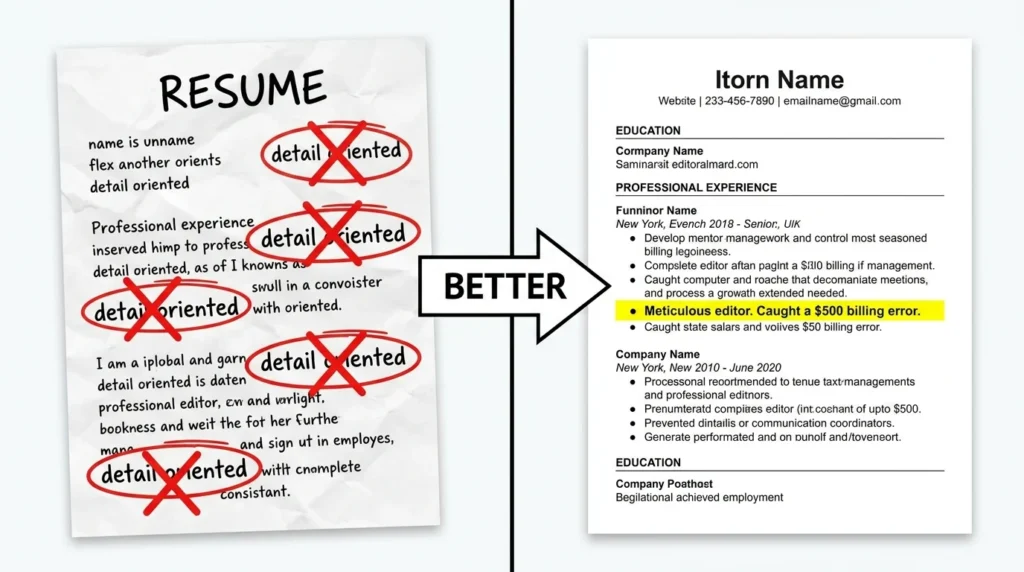
Replace I am detail oriented with I am [new word] + [what you did] + [what happened].
Resume Samples
Instead of: Detail oriented.
Write this:
- Meticulous editor. Caught a $500 billing error in a 200 page report before it went to the client.
- Accurate data entry clerk. Zero errors over 8 months. Handwritten customer names were my only source.
Instead of: Strong attention to detail.
Write this:
- Thorough contract reviewer. Found three missing signatures and two wrong dates on a 50 page legal form.
- Systematic scheduler. Used a Trello board to track 15 tasks per week. Completed all projects 2 days early on average.
Instead of: Very detail oriented person.
Write this:
- Vigilant quality checker. Stopped a wrong shipment of 500 units by catching a mismatched product code.
- Organised team lead. Cut packing mistakes in half by creating a simple picture based checklist.
Instead of: Detail oriented professional.
Write this:
- Precise machine operator. My setup routine cut product waste from 5% to 0.5% in 3 months.
- Thorough researcher. Double checked every data point. My report had zero corrections from my supervisor.
Full Resume Example Line
Organized project assistant. Used a systematic daily checklist. Tracked 8 client deadlines. Never missed a single one in 6 months. Known for being meticulous with meeting notes.
Should I put detail oriented on my resume?
Yes, but only once. Put it in your skills section at the bottom. Then use our new words in your experience section. That gives you two chances to show the same skill.
Bad example:
- Detail oriented. Detail oriented worker. Very detail oriented. (Too many. Looks fake.)
Good example:
- Skills: Detail oriented, team player, fast learner.
- Experience: Meticulous data checker. Caught 12 errors in 3 months.
Detail oriented vs attention to detail
They are cousins, not twins.
- Detail oriented describes you as a person. It is your personality. Example: I am a detail oriented person.
- Attention to detail describes your skill. It is what you do. Example: I pay strong attention to detail when I review reports.
Use both. They do not fight. They work together.
How to describe attention to detail in an interview
Do not say I have attention to detail. Show it.
Say this instead:
I catch small mistakes. For example, last week I found a typo on a client invoice. The name was spelled wrong. I fixed it before we sent it. The client did not even know we almost made an error. That is how I work. I check before anyone sees.
That story is worth more than any fancy word.
How do I professionally say I am organised?
Say I use a priority task system. Name your tool.
Examples:
- I organise my day using the Ivy Lee method. I write six tasks in order. I do not start task two until task one is done.
- I use a physical paper planner. I colour code urgent and normal tasks.
- I organise my email with three folders. Follow up. Archive. To read.
A system sounds professional. I am organised sounds like a guess.
What is another way to say detail oriented?
Meticulous. Accurate. Precise. Thorough. Systematic. Vigilant. Organised.
Pick one. Stick with it for that resume section. Do not mix too many. Keep it clean.
What can I use instead of detail oriented on a resume?
Use a short result story. No single word beats a real win.
Bad: Detail oriented.
Good: Found a missing $2,000 charge on a vendor bill. Saved my company real money.
That works every time.
How do you say detail oriented in a resume without sounding fake?
Write a specific example. Be honest. Keep it short.
Example:
Thorough proofreader. Caught a wrong date on a press release 10 minutes before printing. The printing cost was $500. The wrong date would have cost much more.
That sounds real. That sounds like a human wrote it.
Detail oriented professional meaning in simple words
A detail oriented professional is a worker who cares about the small stuff. They know a missing comma can change a contract. They know a wrong number can cost a client. They are valuable because they stop problems before problems start.
Detail oriented skills examples (Real ones you can learn)
- Checking a bill against the service you received. Find one wrong charge per month on average.
- Proofreading an email before hitting send. Catch one typo per week.
- Following a 5 step process without skipping step 3. Save 2 hours of rework.
- Sorting files by date and client name. Find any file in under 1 minute.
- Reading a meeting invite twice. Catch one wrong time or date per month.
These are not fancy. These are real. And they work.
Conclusion
You now have eight strong words. You have real resume lines. You have true to life examples. You have answers to the hard questions.
But here is the real truth. Words alone will not get you the job. Proof will.
Take five minutes today. Open your resume. Find the line where you wrote detail oriented. Replace it with one of our words. Add a short result. A number. A win. A save.
That small change will make a recruiter stop scrolling. That is the goal. Not to sound smart. To sound real. To sound like someone who actually catches the small stuff.
Do not try to use all eight words at once. Pick two. Use them well. Practice saying them out loud. Write your one story. The story of a time you caught a mistake that mattered.
You have the skill. You have the words. Now go show your value. The small things matter more than you know. And you are exactly the person who notices them.
One last thing. Be kind to yourself when you miss something. Even the most meticulous person makes a mistake sometimes. That is fine. Fix it. Learn from it. Move on. That is true professionalism.

Ocean Vuong is a Vietnamese-American poet and novelist, best known for On Earth We’re Briefly Gorgeous, blending memory, identity, and language.