
We all mess up sometimes. You send the wrong email. You show up late. You forget a promise. Then you need to say sorry. But the old line I apologize for the inconvenience sounds like a robot wrote it. It has no heart.
You want a better way. A real way. A way that makes the other person feel seen and respected.
This article gives you fresh and kind phrases. You will learn what they mean. You will see how to use them at work and at home. You will get simple tips and honest examples. No fancy words. No boring repeats. Just warm words that work. Let us begin.
Why the Old Sorry Feels Cold and Empty
You have seen this phrase a thousand times. I apologize for the inconvenience. It is in every email and on every hold line. But does it ever make you feel better? Probably not.
What this phrase really means
It means you are sorry for a small trouble. But the word inconvenience is too soft. It hides the real problem. It feels like the person does not care.
A small story for you
My friend Neha ordered food online. It came one hour late. The restaurant sent an email saying we apologize for the inconvenience. Neha laughed and said they do not mean it. She was right.
How to spot a weak apology
- It does not name the mistake.
- It uses big, empty words.
- It offers no fix.
A better way to think
Say what you did wrong. Say it simply. Then offer a fix. That is all.
Swap the Robot Sorry for Real Human Words
You do not need to say sorry for the trouble. You can say thank you instead. This small swap changes everything.
What a thank you apology means
You are thanking someone for their patience. You are showing respect for their time. You are not begging. You are connecting.
Tip from my own life
Last week I was late for a call with my boss. I did not say sorry for the delay. I said thank you for waiting for me. He smiled and said no problem. Try this tomorrow.
When to use this swap

- When you are 5 minutes late.
- When a website loads slowly.
- When you make a small typing mistake.
Real life examples
- Thank you for sticking with me while I found the file.
- I see you waited in line. Thank you for being so kind.
- Thanks for catching my error. You saved me.
A Professional Sorry That Does Not Sound Stiff
Many people think professional means cold. That is wrong. You can be warm and still be a pro. You just need the right words.
What a pro sorry looks like
You say the mistake fast. You do not make excuses. You say what you will do next. You keep your voice calm.
A true work story
My colleague Ravi sent the wrong report to a big client. He wrote I am sorry. I sent the wrong file. Here is the right one. The client wrote back no worries. Short and honest worked.
Tips for work apologies
- Use the person’s name. Hey Anjali, my bad.
- Say sorry only once.
- Fix the problem right away.
Examples from real jobs
- I missed the deadline. My fault. The new file is attached.
- You waited ten minutes for me. I am sorry. I owe you a coffee.
- The printer ate your pages. I will print them again for you now.
What to Say When You Are Late and You Caused Trouble
Being late is bad. Making someone wait and also messing up their plan is worse. You need one sorry that covers both.
What a double sorry should feel like
It should not sound like a robot reading a script. It should sound like a human who feels bad. You name the delay. You name the trouble. Then you stop talking and start fixing.
A real example from a shop
A delivery came two days late. The company did not send a cold email. They sent a message saying your package is late. I am truly sorry. Here is a $10 off code for next time. The customer felt happy.
Tips for the double sorry
- Say the delay first.
- Say sorry once with feeling.
- Offer a small gift or a fast fix.
Examples you can use today
- Your order is late by one day. I am sorry. I will waive the delivery fee.
- The meeting started late. I am sorry for taking your time. I will end five minutes early.
- Our app was down. I am sorry you could not log in. The problem is gone now.
Say Sorry Once and Say It Strong
Some people say sorry five times in one email. That is too much. It makes you look weak. One clear sorry is better than ten weak ones.
What a strong sorry sounds like
It is short. It is honest. It does not use the word really or so very. It says what happened and what comes next.
A lesson I learned
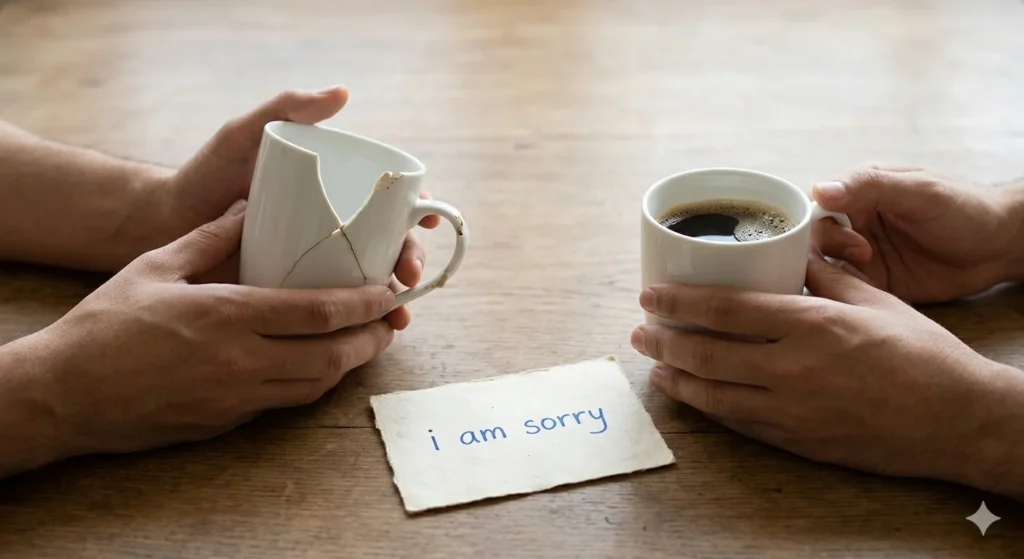
I once broke a friend’s cup. I said sorry sorry sorry sorry for an hour. She got annoyed. The next time I broke a glass, I said oh no, I am sorry. Let me buy a new one. She said it is fine. Less is more.
Tips for a strong sorry
- Say sorry at the very start.
- Do not explain too much.
- Move to the solution fast.
Examples of strong and short sorrys
- I apologize for the error. The correct bill is here.
- Sorry I interrupted you. Please finish your thought.
- I was wrong to cancel. Let me make a new plan.
Is That Old Phrase Even Correct? Let Us Check
You might wonder if I apologize for the inconvenience is wrong English. It is not wrong. It is just weak. Grammar says yes. People say no.
What correct really means
Correct means the words follow the rules. But good communication is about more than rules. It is about how the other person feels.
A small test for you
Say this to a friend: I apologize for the inconvenience. Now say this: Oh no, my bad. Which one feels better? The second one, right? That is your answer.
When the old phrase is okay to use
- In a very formal letter to a bank.
- On a sign about a closed door.
- When the problem is tiny, like a broken pencil.
Examples where it is fine
- The elevator is not working. Apologies for the trouble.
- Our office moves to the third floor. Sorry for the switch.
- The form changed. Sorry for any confusion.
Soft and Kind Words That Replace That Hard Word
The word inconvenience is hard and cold. It sounds like a doctor saying something bad. You can use softer words instead. Words like trouble, mix up, glitch, and delay.
What these soft words mean
- Trouble means a small problem. Good for friends.
- Mix up means a confusion. Good for schedules.
- Glitch means a small tech error. Good for apps.
- Delay means waiting. Good for time issues.
A story to show the difference
My sister said sorry for the inconvenience when her wifi went down. I felt nothing. Then my neighbor said sorry for the glitch, the wifi is back. I felt better. Soft words work.
Tips for picking the right soft word
- Use trouble at home.
- Use mix up for wrong dates.
- Use glitch for phones and laptops.
- Use delay for trains and meetings.
Examples with soft and kind words
- Sorry for the mix up. I meant Monday, not Tuesday.
- The app had a small glitch. It works now. Thanks for waiting.
- Sorry for the trouble at check in. Let me help you.
- Sorry for the delay. The bus is five minutes away.
A Cheat Sheet of Kind Sorrys for Every Day
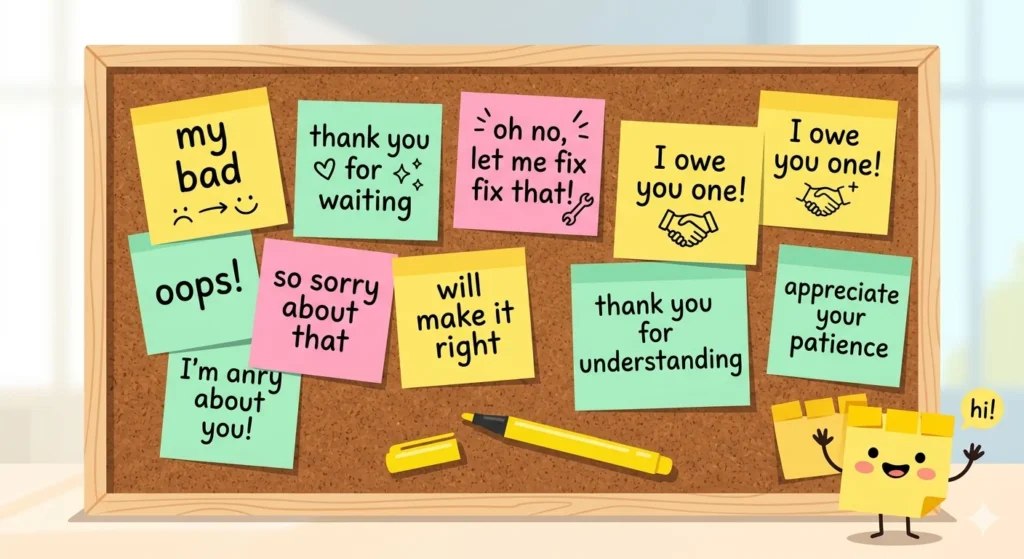
Keep this list near your desk. Or save it on your phone. These are warm, real, and ready to use. No robot words allowed.
What this cheat sheet gives you
It gives you a friendly sorry for every situation. Work problems. Home mistakes. Small errors. Big mess ups. One phrase for each.
Tip from a customer service worker
A woman named Sara works at a help desk. She never says sorry for the inconvenience. She says oh dear, let me see what I can do. People love her. You can be like Sara.
When to use these phrases
- In an email to your boss.
- In a text to your friend.
- In person at a store.
- On a call with a client.
Your cheat sheet of honest examples
- What a mess. I am so sorry. Let me clean it up.
- I owe you an apology. I forgot our call completely.
- That was my bad. How can I make it right?
- Thank you for being so kind about my mistake.
- I dropped the ball on this one. I will do better next time.
- I see why you are upset. You are right to be.
- No excuses from me. I am sorry. What do you need?
- I appreciate you telling me the truth. I will fix this today.
Conclusion
You do not have to say I apologize for the inconvenience ever again. Throw that phrase away. It does not serve you. It does not help the other person. It just sits there like a cold fish.
You have better tools now. You can say thank you for waiting. You can say my bad. You can say oh no, let me fix that. You can name the trouble with soft words like glitch or mix up. You can tell a short story with your sorry. You can be warm and professional at the same time.
Remember this one thing. People do not need a perfect sorry. They need a real sorry. They need to know you see them. They need to know you care. When you mess up, breathe. Pick one kind phrase from this article. Say it with honesty. Then fix the problem. That is all. You will keep your friends. You will keep your job. You will keep your peace of mind. Now go and be kind with your sorrys.

Madeline Miller is an American author known for Circe and The Song of Achilles, reimagining Greek myths with emotion and depth.