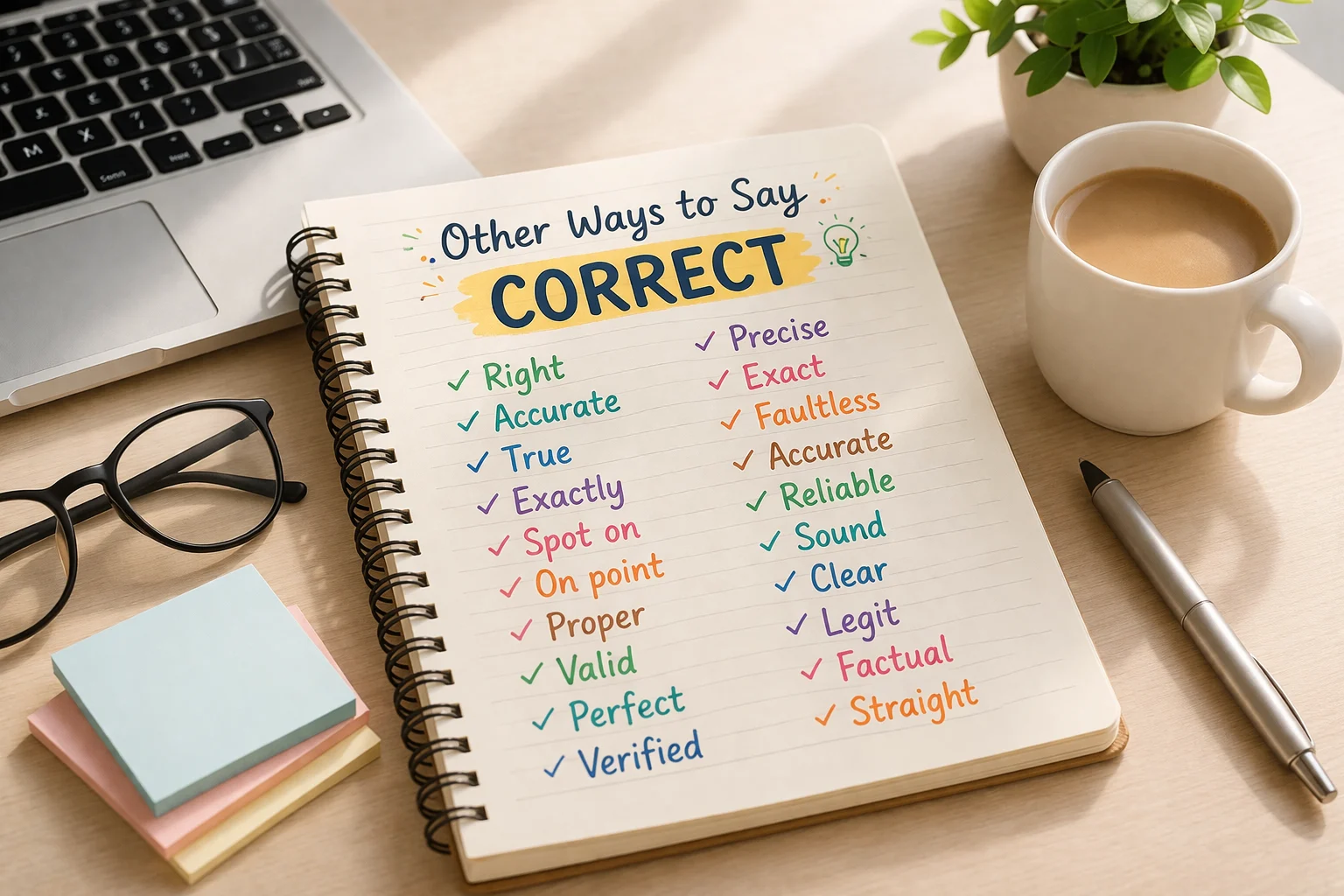
Looking for better and more natural other ways to say “correct” in conversations, writing, or professional communication? While “correct” is commonly used, repeating it can sound basic or less engaging. Using alternatives like “right,” “accurate,” “exact,” “true,” or “spot on” can make your language more polished and expressive.
These phrases are widely used in daily conversations, classrooms, emails, and workplace communication, helping you sound more fluent and confident. Many English learners search for formal, casual, and professional synonyms of “correct” to improve vocabulary and avoid repetition. Whether you’re confirming information, giving feedback, or responding in a discussion, choosing the right word improves clarity and tone.
In this guide, you’ll discover a variety of simple, polite, and professional ways to say “correct”, along with examples to use them effectively in real-life situations.
Ways to Say Correct When Something Is Right
These words help when something is true or matches facts. Use them in daily life and simple writing.
- Right
- True
- Accurate
- Exact
- Spot on
- On point
- Proper
- Valid
- Legit
- Precise
- Faultless
- Perfect
- Reliable
- Sound
- Straight
- Verified
- Clear
- Honest
- Real
- Factual
👉 Example: Your answer is spot on and makes sense
👉 Tip: Use simple words like right and true in daily talk
Ways to Say Correct in School or Study
These words are useful for homework, tests, and class talk. They sound positive and helpful.
- Right answer
- Well done
- Good job
- That is right
- You got it
- Perfect answer
- Correct response
- Nicely done
- That works
- Fully right
- Good thinking
- Smart answer
- You nailed it
- That fits
- Well answered
- Spot on answer
- That is true
- Accurate reply
- Right choice
- Strong answer
👉 Example: You nailed it in your math problem
👉 Tip: Teachers like clear and simple answers
Ways to Say Correct in Conversation
Use these in daily talk with friends and family. They sound natural and friendly.
- Yeah that is right
- You are right

- Exactly
- True that
- That is true
- I agree
- You got it
- That is correct
- Totally right
- Yes that works
- Makes sense
- I see that
- Right on
- Good point
- Fair enough
- Sounds right
- That checks out
- I think so too
- You are spot on
- Could not agree more
👉 Example: You are right about this plan
👉 Tip: Keep your tone soft and friendly
Ways to Say Correct in Formal Writing
These words are best for essays, reports, and articles. They sound clear and professional.
- Accurate
- Valid
- Correct
- Verified
- Appropriate
- Proper
- Suitable
- Exact
- Precise
- Reliable
- Consistent
- Sound
- Logical
- Justified
- Well supported
- Fact based
- Approved
- Confirmed
- Clear
- Strong
👉 Example: This is a valid and logical argument
👉 Tip: Avoid casual words in formal writing
Ways to Say Correct in Work or Office
Use these in emails, meetings, and tasks. They help you sound confident and clear.
- Approved
- Confirmed
- Verified
- Good to go
- All set
- Looks right
- Checked
- Matches
- Works fine
- Done right
- Fits well
- On track
- Good result
- Ready
- Complete
- Accepted
- Cleared
- No issues
- Properly done
- Looks good
👉 Example: The file is checked and good to go
👉 Tip: Keep your words simple and direct
Ways to Say Correct in Casual Tone
These are light and easy words. Use them with friends or in relaxed chat 😊
- Yep
- Yeah
- Yup
- Totally
- For sure
- Right
- True
- You bet
- Exactly
- No doubt

- Sure thing
- That is it
- Got it right
- Totally right
- Spot on
- Sounds good
- Cool
- Nice
- That works
- All good
👉 Example: Yep, that is totally right
👉 Tip: Casual words should not be used in exams
Ways to Say Correct When Fixing Mistakes
Use these when you improve something or fix errors.
- Fixed
- Corrected
- Improved
- Adjusted
- Updated
- Revised
- Edited
- Repaired
- Sorted
- Cleared
- Solved
- Set right
- Made better
- Cleaned up
- Polished
- Refined
- Reworked
- Straightened
- Restored
- Balanced
👉 Example: I corrected the mistake in the report
👉 Tip: Always review your work after fixing
Ways to Say Correct in Exams or Tests
These words help in answers and academic writing.
- Right answer
- Correct choice
- Accurate answer
- True statement
- Best answer
- Correct option
- Right solution
- Valid answer
- Perfect response
- Proper answer
- Exact answer
- Fully correct
- Well answered
- Ideal answer
- Strong answer
- Clear answer
- Accepted answer
- Correct result
- True answer
- Good response
👉 Example: This is the correct option in the test
👉 Tip: Read the question before answering
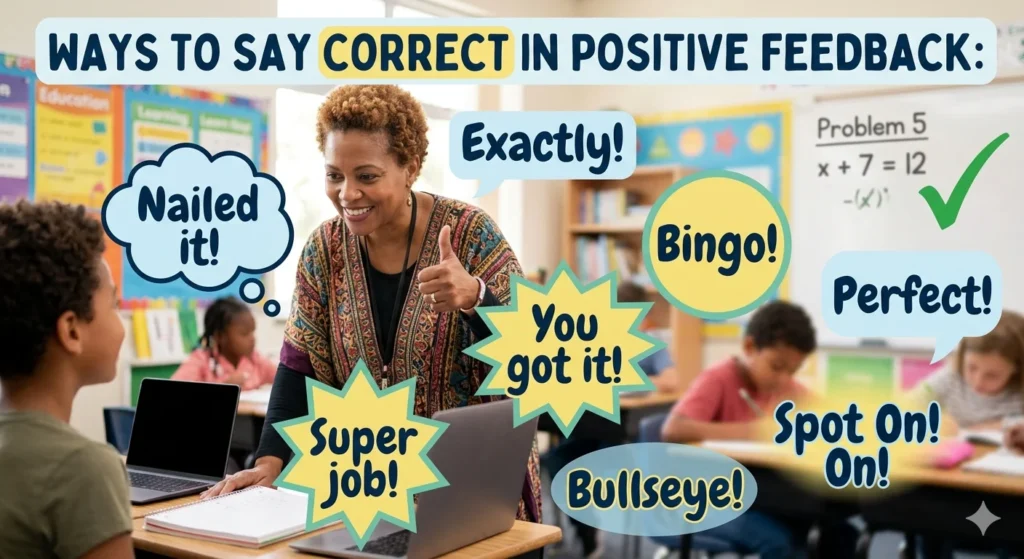
Ways to Say Correct in Positive Feedback
Use these to praise someone in a kind way.
- Great
- Excellent
- Perfect
- Well done
- Amazing
- Nice work
- Good job
- Brilliant
- Fantastic
- Impressive
- Solid
- Strong
- Smart
- Outstanding
- Wonderful
- Superb
- Clean work
- Sharp
- Great effort
- Top work
👉 Example: Excellent work on your project
👉 Tip: Positive words boost confidence
Ways to Say Correct in Technical or Exact Context
Use these when accuracy is very important.
- Precise
- Accurate
- Exact
- Measured
- Calculated
- Verified
- Validated
- Matched
- Calibrated
- Tested
- Confirmed
- Consistent
- Reliable
- Error free
- Aligned
- Structured
- Standard
- Balanced
- Defined
- Checked
👉 Example: The data is accurate and verified
👉 Tip: Use these in science or technical work
Common Mistakes When Using Correct
Many people make small mistakes with this word. Avoid these to improve fast.
- Using correct too much
- Not using synonyms
- Ignoring context
- Mixing formal and casual tone
- Using hard words when not needed
- Repeating the same phrase
- Not adding examples
- Writing long sentences
- Not checking meaning
- Using wrong tone in exams
- Using casual words in formal writing
- Forgetting clarity
- Not thinking about reader
- Overusing precise or exact
- Writing without variation
- Copying words blindly
- Using weak vocabulary
- Ignoring flow
- Not editing work
- Making sentences confusing
👉 Tip: Always match your word with the situation
Conclusion
Learning different ways to say correct is a simple but powerful step. It improves your writing, speaking, and confidence. When you use the right word, your message becomes clear and strong. You do not need complex words. Simple and smart choices work best.
Try to practice these words in daily life. Use them in school, work, and conversations. Over time, you will see a big change in your style. Your writing will feel fresh, and people will understand you better. Keep your language easy, clear, and natural. That is the real secret to good communication and strong expression 😊
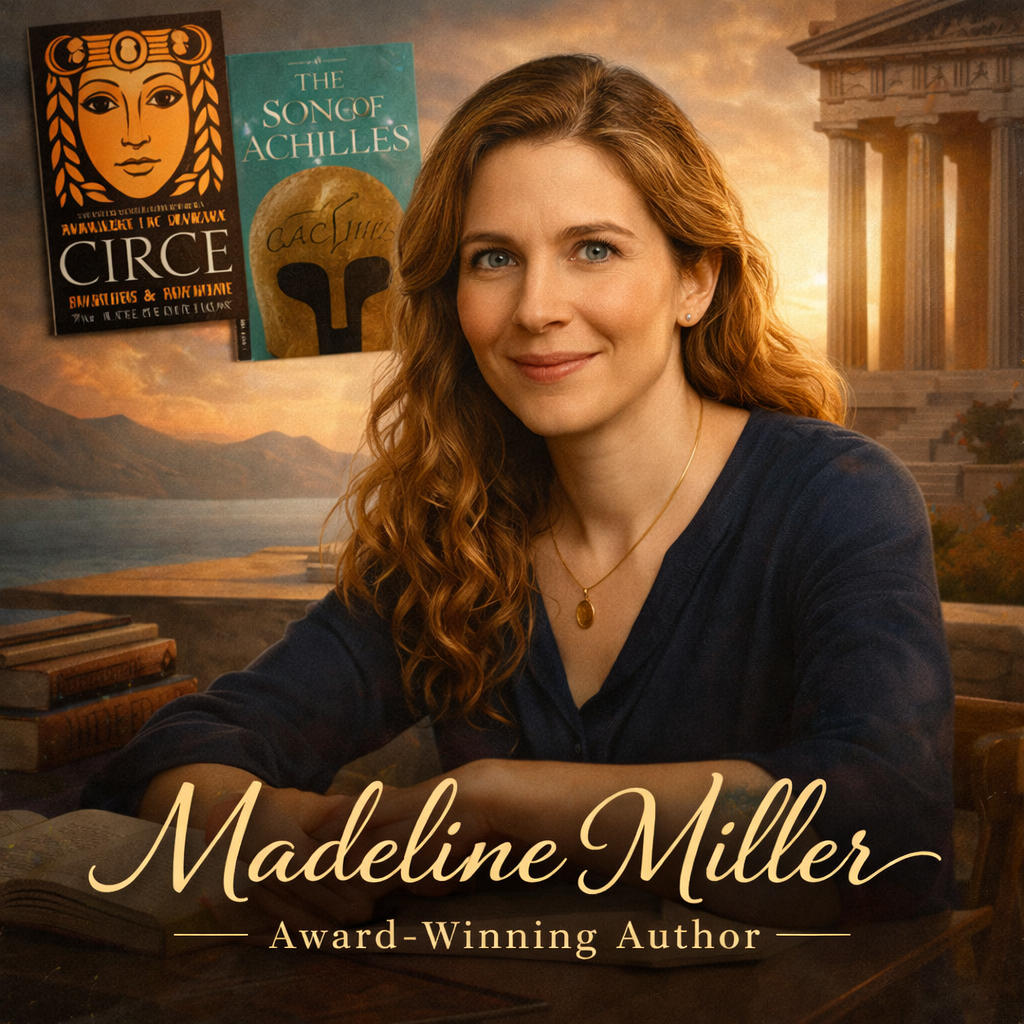
Madeline Miller is an American author known for Circe and The Song of Achilles, reimagining Greek myths with emotion and depth.